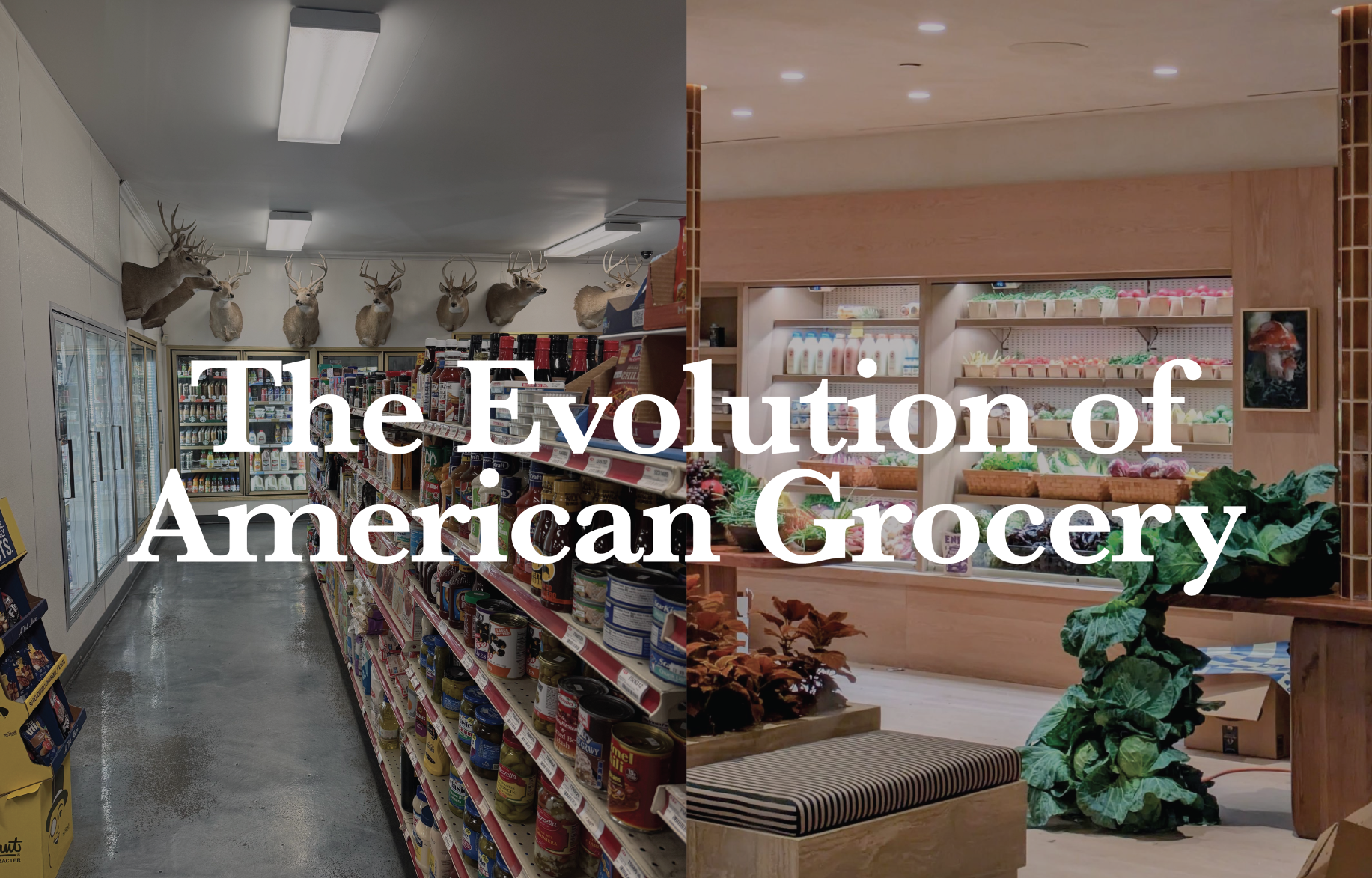
The Evolution Of American Grocery
More curated grocery concepts continue to emerge across the country.
Erewhon may be the most visible example, but this is much bigger than one market. Stores like Laurel Supply, Meadow Lane and brands like Masa and Oishii point to a broader consumer shift taking place around food, discovery, and curation.
At the same time, we continue to hear that consumers are trading down.
That is true.
But they are also trading way up.
Consumers are becoming far more selective about where they save and where they are willing to spend more for a better experience, better ingredients, stronger brand affinity, or products that feel culturally relevant.
They are buying private label in one aisle and spending $6 on a protein bar in the next.
This does not replace value-oriented grocery shopping. If anything, it reflects the increasingly polarized way consumers shop today.
Consumers are already seeking out these experiences. The opportunity for mass grocery may be finding more intentional ways to participate in the more discovery-driven and elevated portions of that basket within their own ecosystem.
Which raises an interesting question for mass grocery.
If consumers continue seeking out more curated and elevated food experiences, do retailers eventually stop scattering these brands throughout the store and start curating them together?
Could retailers like H-E-B, Ralphs, or Kroger create a more intentional premium discovery environment within grocery itself?
Not a natural and organic aisle. We already saw that wave twenty years ago.
And not simply a “better for you” set organized around functional claims like protein, paleo, or low sugar. Those are product fundamentals.
What feels more likely is a merchandising strategy built around taste, curation, ingredient quality, craft production, cultural relevance, and packaging that feels considered.
Retail has been doing versions of this for decades.
Department stores built “store within a store” concepts for shoppers looking to discover, indulge, or trade up. Beauty retailers created curated environments that made shopping feel experiential rather than transactional.
Grocery has always had moments of theater, discovery, and regional personality. But historically, utility has remained the dominant merchandising logic.
The next evolution may be making discovery, curation, and experience a more intentional part of everyday grocery retail.